Why the odd old picture beats the perfect new one
The BBC recently published an article about what it calls the “human premium”: the idea that, as AI makes more of our art, we may start to value things made by people even more.
Two points in it stayed with me.
We value the story behind the thing.
Part of the wonder of the Sistine Chapel is knowing that people made it. It's not just the image itself, but the skill and imagination behind it. The same can be true of a Victorian illustration or a medieval marginal doodle. Knowing who made it, when, and what it was for can add another layer of interest.
That's one of the things I love about old images. Even when I don't know the whole story, I know I'm looking at something that really existed.
Distinctive may beat perfect.
The article suggests that readers are beginning to value writing that feels personal, even a little messy, while designers are leaning into the unusual.
If a machine can produce endless polished images, another flawless picture might not be all that remarkable. Something strange, surprising or gloriously peculiar might be much more interesting.
And that's rather the point of Pekuliar Piktures: finding and sharing real images, made by real people, with all their wonderful oddness intact.
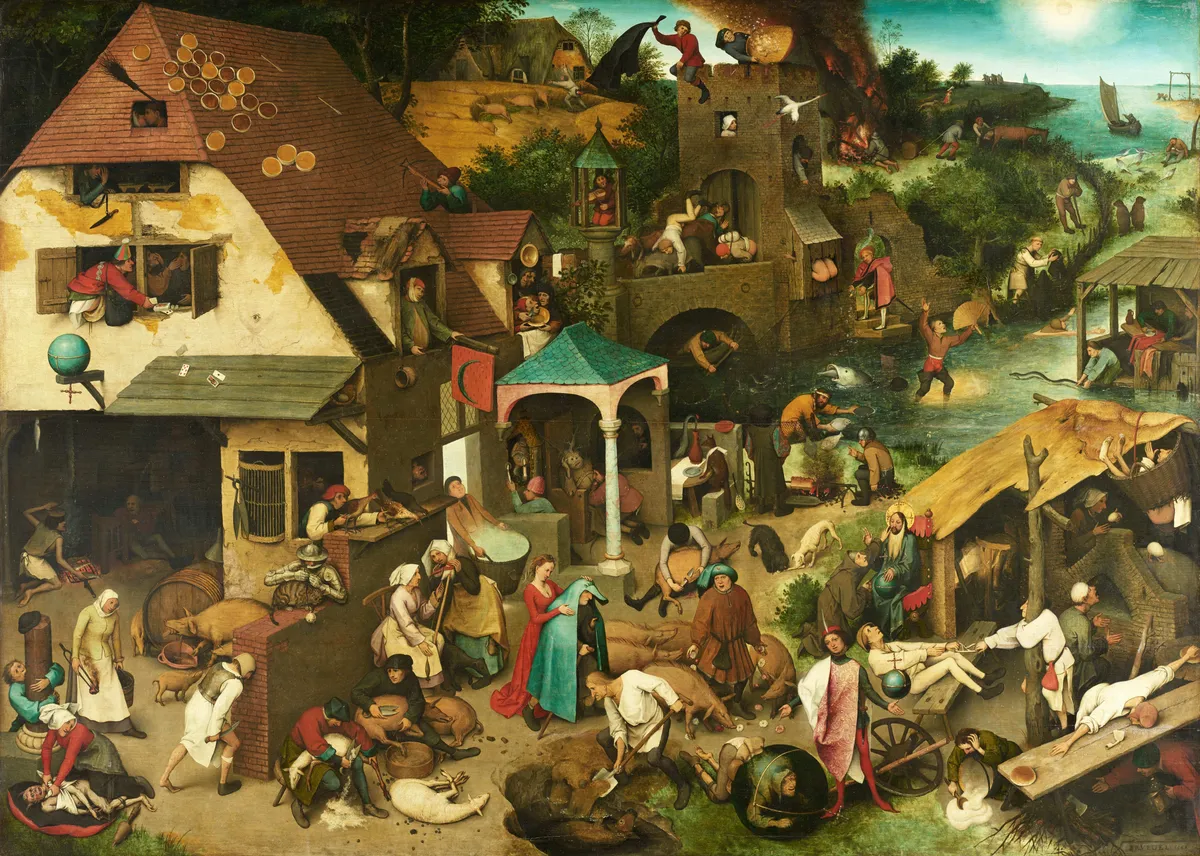
Source: Pieter Bruegel the Elder, Netherlandish Proverbs (1559). Gemäldegalerie, Staatliche Museen zu Berlin. Photograph: Christoph Schmidt. Public Domain Mark 1.0.